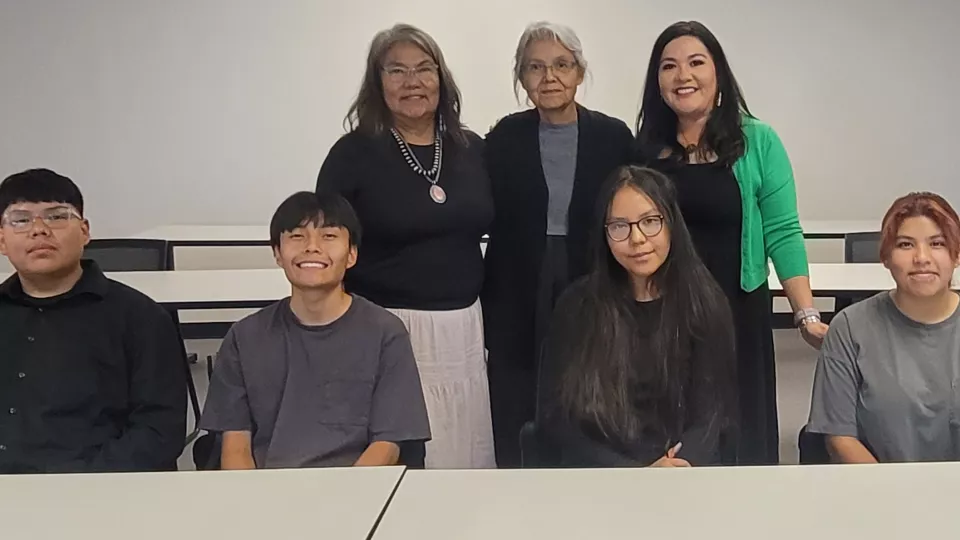
Southwestern Indian Polytechnic Institute in Albuquerque, New Mexico, launched a powerful bridge for native high school students this summer through a dual credit program. By offering college-level coursework to high schoolers, SIPI is helping students step confidently into a post-secondary education environment rooted in their cultural identity.
Bobbi Brown, SIPI’s Dual Credit Coordinator, launched the program.
“Our goal is to create access, giving native students a college experience that feels supportive and attainable,” Brown said. “We want students to understand that they belong in these academic spaces.”
This summer’s Navajo 1 and Navajo Government courses focused on cultural identity and leadership, encouraging students to bring their personal and community experiences into the classroom.
“It’s not just about academic credit,” Brown said. “For many students, this is their first real exposure to what college feels like. We want it to be empowering.”
Mary Whitehair-Frazier, M.A., Ed.S., taught the courses. She began teaching at SIPI in 2009 and approaches education as an intellectual and cultural responsibility.
“I see our classroom as a space to not only teach but to listen – to honor where students are coming from,” Whitehair-Frazier said.
Her course assignments showed students the rigor of college-level academics and engaged them in leadership, responsibility, and cultural identity questions.
“There was one student who gave a presentation on traditional leadership, and they started crying while they were speaking,” Whitehair-Frazier said. “Not because they were embarrassed but because they were proud. That moment was powerful.”
Another student wrote about their grandfather’s teachings in their final essay.
“They connected academic learning with personal history, and that’s the heart of what we do here,” Frazier said. “That’s what makes this work so important.”
Program Support Assistant Rena Sandoval recognized the impact the experience had on students.
“We had students who barely spoke the first couple days, and by the end they were leading discussion. That’s the growth we love to see,” she said.
Beyond classroom learning, SIPI’s Dual Credit Program is critical in helping students qualify for scholarships such as the Chief Manuelito Scholarship, awarded to Navajo students who meet rigorous academic and cultural criteria.
“One requirement is a Navajo language course,” Brown said. “That can be a real barrier for urban students who didn’t have access to language classes in high school. That’s another area where dual credit can make a difference. We can provide that missing opportunity.”
Brown and her team are working to ensure that SIPI continues to offer courses that support academic goals and cultural competency.
“This program isn’t just about checking boxes. It’s about identity, access, and ensuring our students feel seen and prepared,” she said.
Brown and Frazier agree that the impact goes far beyond credit earned.
“These students are our future scholars, our future leaders,” Frazier said. “When they walk into our classroom, they bring their communities with them. That’s what transforms education into something meaningful.”
For more information about SIPI’s Dual Credit Program, email Bobbi Brown.
Contact
Office of Communications
Bureau of Indian Education Central Office
U.S. Department of the Interior
1849 C Street NW, MIB-3610
Washington, DC 20240
Telephone: 202-941-0789
Email: biecommunications@bie.edu